
How Long Does Fall Sod Take to Establish in Eau Claire WI?

Fall is one of the better times to install sod in Eau Claire because the soil is often still warm while air temperatures begin cooling. That combination reduces heat stress and gives cool-season grasses a good opportunity to develop roots before winter.
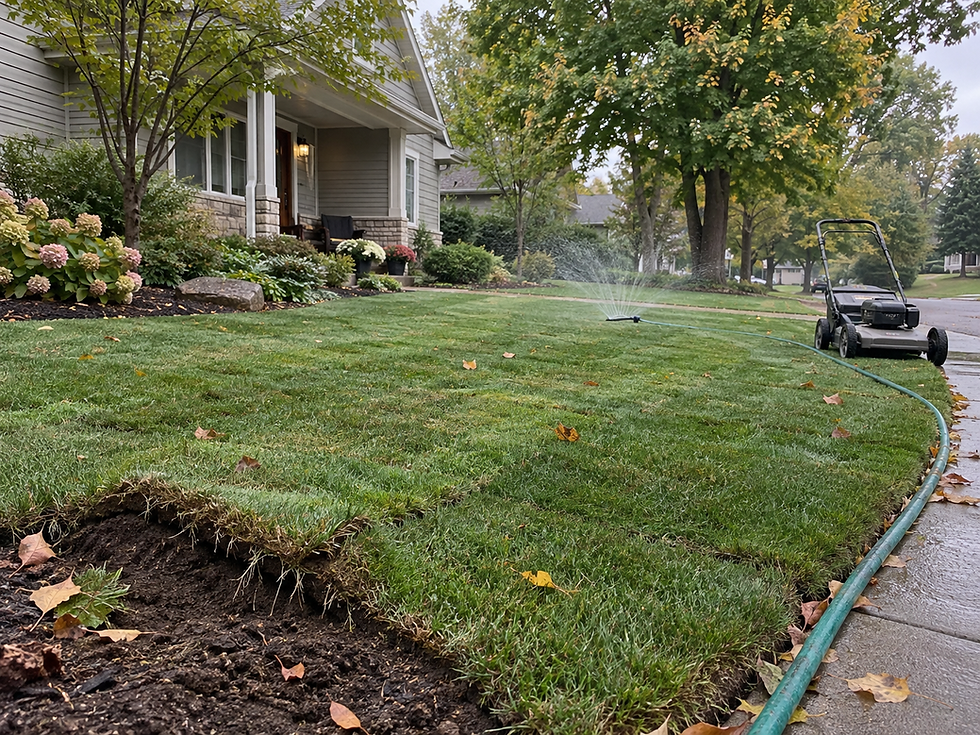
For homeowners asking how long does fall sod take to establish in Eau Claire WI, initial root attachment often begins within about 10 to 14 days under favorable conditions. Stronger establishment usually takes around four to six weeks, although cooler late-fall temperatures can slow the process.
The exact timeline depends on installation date, soil temperature, watering, sod quality, grading, and how quickly cold weather arrives.
How Long Does Fall Sod Take to Establish in Eau Claire WI?
In most cases, homeowners should expect fall sod to need four to six weeks to establish well enough for normal residential use.
That does not mean the lawn is fully mature after six weeks. Root development continues beyond that point, but the sod should be more firmly attached to the soil and less vulnerable to shifting or drying.
The timeline can be shorter or longer depending on:
Soil temperature
Air temperature
Sod variety
Soil preparation
Watering
Rainfall
Sun exposure
Shade
Installation quality
A September installation usually has more time to root before winter than one installed in late October.
What Happens During the First Week?
The first week is mainly about moisture and soil contact.
New sod is still relying heavily on the moisture contained in the rolls and the water applied after installation. The roots have not yet grown significantly into the soil below.
During this stage:
Keep the sod consistently moist
Avoid heavy foot traffic
Prevent edges from drying
Check that water reaches the soil underneath
Avoid standing water
Watch for shifting on slopes
You can carefully lift a corner at the edge of the lawn to check whether the soil below is damp.
The top of the grass may look wet while the root zone underneath is still dry.
When Does Root Attachment Begin?
Early root attachment often begins around 10 to 14 days after installation when soil temperatures remain favorable.
One simple test is to gently lift a corner of the sod.
If the sod lifts very easily, rooting is still limited.
If it begins to resist lifting, new roots are starting to grow into the prepared soil.
Do not repeatedly pull up large areas to check. A gentle test at an edge is enough.
In cooler fall weather, this process can take longer than it would during warm spring or summer conditions.
How Fall Weather Affects Establishment
Fall weather can be excellent for sod because cooler air reduces evaporation while the soil remains relatively warm.
However, the season also becomes less predictable as winter approaches.
Eau Claire homeowners may experience:
Cool mornings
Mild afternoons
Occasional warm spells
Heavy fall rain
Early frost
Falling leaves
Rapid temperature drops later in the season
A light frost usually does not ruin healthy cool-season sod, but colder soil slows root growth.
This is why earlier fall installation is generally preferable when possible.
September vs October Sod Installation
September
September is usually the strongest fall window.
Advantages include:
Warm soil
Moderate temperatures
Longer daylight
More rooting time
Lower watering demand than midsummer
Sod installed in September may begin rooting quickly and have several weeks to strengthen before winter.
October
October installation can still work, especially earlier in the month.
However:
Rooting may be slower
Soil temperatures are lower
Daylight is shorter
Frost becomes more likely
Heavy leaf accumulation may interfere with the lawn
Late October installations may not fully establish before winter, but healthy sod can remain dormant and continue rooting once conditions improve in spring.
Watering Fall Sod
Fall sod still needs immediate and consistent watering.
Cooler temperatures do not eliminate the need for irrigation.
During the first week:
Water thoroughly after installation
Keep the root zone consistently moist
Check edges near sidewalks
Reduce watering after meaningful rain
Avoid prolonged saturation
As rooting develops, watering should gradually become deeper and less frequent.
One mistake homeowners make is stopping irrigation too early because the weather is cool.
The sod still needs moisture until cold temperatures make watering unnecessary.
Mowing Fall Sod
The first mowing should happen when:
Grass reaches approximately 3½ to 4 inches
The soil is firm enough to support the mower
Sod resists gentle lifting
The lawn is not saturated
Use a sharp mower blade and remove no more than one-third of the grass height.
Mowing too soon can shift sod pieces or damage shallow roots.
If the sod is installed late in the season and never reaches mowing height before winter, do not force a mowing simply because the calendar is changing.
Fall Leaves Can Slow Establishment
Mature trees are common around Eau Claire neighborhoods, and leaf buildup can become an issue with fall sod.
A thick layer of leaves can:
Block sunlight
Trap excess moisture
Flatten grass
Increase disease pressure
Slow drying after rain
Remove leaves carefully and regularly.
Avoid aggressive raking that can pull sod before it is rooted. A blower or gentle collection method is usually safer during the first few weeks.
Eau Claire WI Climate Considerations
Eau Claire has cold winters and a relatively short transition from fall into freezing conditions.
Important local factors include:
September soil warmth
Cooler October nights
Fall rainfall
Early frost risk
Clay-heavy soils in some areas
Freeze-thaw cycles
Mature tree shade
Leaf accumulation
The best installation window usually depends on how much growing time remains before the ground freezes.
Even if top growth slows, roots may continue developing while soil temperatures remain suitable.
Realistic Fall Sod Installation Costs
Fall installation pricing is generally similar to spring or summer pricing.
Typical planning ranges include:
Basic sod installation: $1.00 to $1.50 per square foot
Removal and replacement: $1.50 to $2.50+ per square foot
Small repair areas: $150 to $500+
Topsoil: Additional
Finish grading: Additional
Drainage correction: Quoted separately
For example:
1,000 sq ft: approximately $1,000 to $1,500
2,500 sq ft: approximately $2,500 to $3,750
5,000 sq ft: approximately $5,000 to $7,500
If old turf removal, grading, or topsoil is required, the project total may be significantly higher.
Can Fall Sod Survive Winter?
Yes. Properly installed cool-season sod can survive winter even if it is not fully mature before freezing temperatures arrive.
The key is making sure the sod:
Has good soil contact
Receives proper watering
Is not severely dried out
Is not heavily trafficked
Has begun some root attachment
Is not buried under leaves
Kentucky bluegrass is well suited to Wisconsin winters.
The lawn may appear dormant through winter and resume stronger root growth in spring.
Common Homeowner Concerns
Homeowners often worry that fall sod will not have enough time to root.
In many cases, early fall provides plenty of time.
Common questions include:
Will frost kill new sod?
Should I keep watering in October?
Can I mow before winter?
What if the grass stops growing?
Will snow damage the sod?
Can pets use the lawn?
How do I know if it is rooted?
Will seams close before winter?
The main goal is to get the sod firmly settled and partially rooted before winter.
Perfect maturity is not required.
Frequently Asked Questions
How long does fall sod take to establish in Eau Claire WI?
Initial rooting often begins in about 10 to 14 days, while stronger establishment usually takes four to six weeks.
Is September better than October for sod?
Yes. September generally provides warmer soil and more time for root development.
Can sod root in cold weather?
Root growth slows as soil temperatures drop, but some development may continue until the ground becomes very cold.
Will frost ruin new sod?
Light frost usually does not kill healthy cool-season sod.
Should I water fall sod every day?
During the first week, frequent watering may be necessary. Gradually reduce frequency as roots establish and weather cools.
When can I mow fall sod?
Mow when the grass reaches about 3½ to 4 inches and the sod is rooted enough that the mower will not shift it.
Can sod survive winter if it is not fully rooted?
Yes. Properly installed sod can overwinter and continue establishing in spring.
Should leaves be removed from new sod?
Yes. Thick leaf buildup can block sunlight and trap moisture.
How much does fall sod installation cost?
Basic installation commonly ranges from about $1.00 to $1.50 per square foot, with removal and preparation increasing the total.
Contact Eau Claire Sod & Hydroseed
If you are wondering how long does fall sod take to establish in Eau Claire WI, most lawns begin rooting within about two weeks and develop stronger establishment over four to six weeks.
Eau Claire Sod & Hydroseed provides professional sod installation, hydroseeding, finish grading, soil preparation, erosion control, and lawn repair throughout the Eau Claire area.
Contact us today for a free estimate and let our team help you plan a fall sod installation with the right preparation, timing, and watering strategy for Wisconsin conditions.


Comments