
Cost to Level a Yard Before Hydroseeding in Eau Claire WI
- Gwyneth Diogracias
- Aug 11
- 6 min read

Hydroseeding can establish a healthy lawn efficiently, but the quality of the finished result depends heavily on the ground underneath it. If a yard has low spots, construction ruts, uneven slopes, compacted soil, or drainage problems, those issues should usually be corrected before hydroseed is applied.
For homeowners researching the cost to level a yard before hydroseeding in Eau Claire WI, professional yard leveling commonly ranges from roughly $1 to $2 per square foot, although simple finish grading may cost less and complex drainage or earthmoving work can cost considerably more. National 2026 pricing data places typical yard leveling around this range, with total project costs varying significantly according to property size and slope.
The important distinction is that not every hydroseeding project requires extensive leveling. Some properties only need light finish grading, while others require soil import, drainage correction, or substantial reshaping before grass can be established successfully.
Cost to Level a Yard Before Hydroseeding in Eau Claire WI
Professional yard leveling commonly runs around $1 to $2 per square foot for projects requiring meaningful grading work. Current national cost data lists an average yard-leveling project near $2,178, with many jobs falling between approximately $1,022 and $3,334.
Another current estimate places land grading around $0.80 to $2.00 per square foot, with complexity and equipment needs significantly influencing the final total.
For planning purposes:
A 1,000-square-foot area might cost roughly $800 to $2,000 for substantial grading.
A 2,500-square-foot area could range from approximately $2,000 to $5,000.
A 5,000-square-foot yard may cost several thousand dollars if the entire area requires significant reshaping.
These numbers should not be applied automatically to every lawn. A contractor performing light final grading immediately before hydroseeding may charge considerably less than a company correcting major drainage and elevation problems.
What Does Yard Leveling Actually Include?
“Leveling” does not necessarily mean making the property perfectly flat. A healthy lawn usually needs subtle slope so rainwater drains instead of collecting in low spots.
Before hydroseeding, grading may involve:
Filling depressions
Cutting down high areas
Smoothing equipment ruts
Removing stones and debris
Correcting abrupt grade changes
Creating gradual drainage slopes
Fine grading the upper soil layer
Preparing a smooth seedbed
The goal is a lawn surface that is reasonably even while still moving water away from structures and other sensitive areas.
A completely flat yard may actually create drainage problems, so contractors generally grade for both appearance and water movement.
Why Leveling Matters Before Hydroseeding
Hydroseeding follows the contours of the existing soil. It will not hide depressions or correct a poorly graded lawn.
If hydroseed is applied before these issues are addressed, homeowners may end up with:
Standing water
Uneven grass growth
Difficult mowing
Muddy low spots
Seed washout
Thin areas
Exposed high spots that dry quickly
Water moving toward foundations
Once grass becomes established, fixing these problems can require disturbing or removing the new lawn. Completing the grading first is usually more efficient.
Light Finish Grading vs Major Yard Leveling
One of the biggest factors affecting price is the amount of correction required.
Light Finish Grading
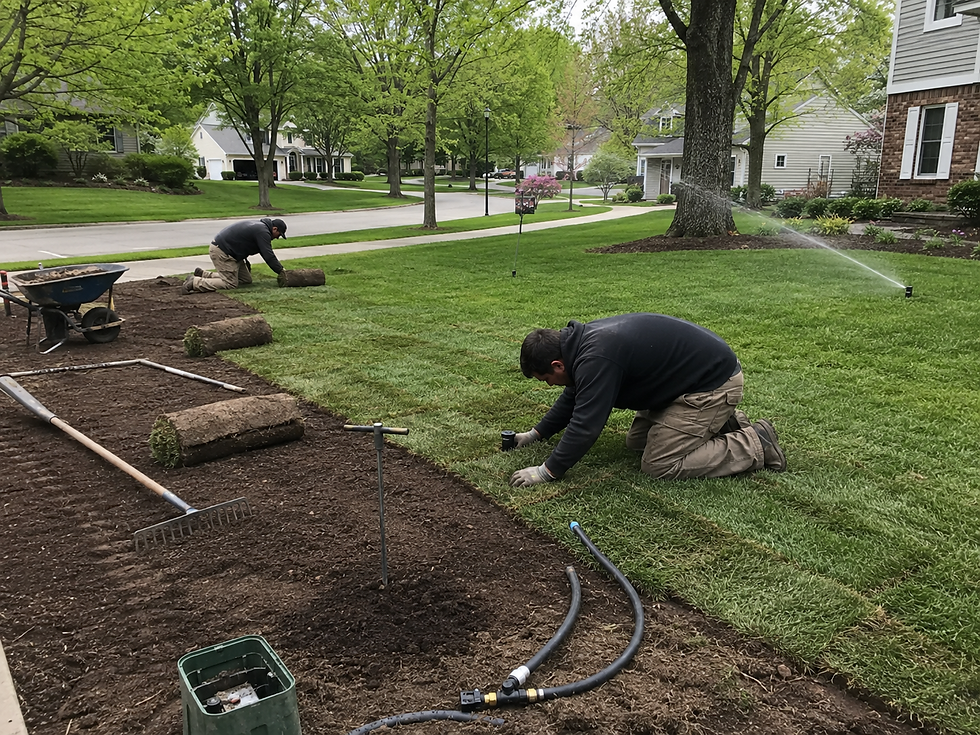
Light grading may be appropriate when the site is already close to final grade. The contractor may simply smooth the upper soil, remove small rocks, fill shallow depressions, and create a clean seedbed.
This is common on:
New construction lawns after rough grading
Recently excavated areas
Lawns receiving imported topsoil
Small renovation areas
Properties with minor surface irregularities
Light finish grading is generally less expensive than full yard leveling.
Major Leveling
More substantial work may be needed when:
Water regularly pools in the yard
Large depressions exist
The property has significant construction damage
Soil must be moved between areas
The existing grade directs water toward the house
Large quantities of fill or topsoil are required
These projects may require skid steers, compact equipment, hauling, and multiple grading passes.
Topsoil Can Increase the Project Cost
Not every yard can be leveled using the soil already present. Additional screened topsoil may be necessary when existing material is rocky, compacted, thin, or unsuitable for turf.
Topsoil may be used to:
Fill low areas
Improve the upper root zone
Cover poor construction fill
Smooth minor grade variations
Improve seed-to-soil contact
The price depends on:
Number of cubic yards required
Material quality
Delivery distance
Equipment access
Labor to spread and grade it
Adding topsoil increases the initial investment, but good soil preparation can significantly improve lawn establishment.
Drainage Problems Should Be Addressed First
Yard leveling and drainage are closely connected, but grading alone does not solve every water problem.
Some properties may require additional solutions such as:
Downspout extensions
Drainage swales
Catch basins
Drain tile
French drains
Regrading around structures
If water continues flowing through the lawn after hydroseeding, seed and mulch may wash into low areas before roots establish.
Correcting the cause before applying hydroseed can prevent repeated repairs.
Eau Claire WI Climate Considerations
Eau Claire experiences substantial seasonal variation, and Wisconsin climate records use the 1991–2020 period as the current standard climate-normal baseline. The region experiences cold winters along with a warm growing season, making drainage and soil preparation especially important after freeze-thaw cycles and spring moisture.
Local conditions that affect grading include:
Spring snowmelt
Saturated soil
Summer thunderstorms
Periodic dry spells
Freeze-thaw movement
Clay-heavy soils in some areas
Wet ground should generally be allowed to firm before heavy grading equipment is used. Working excessively wet soil can create compaction, ruts, and clods that make finish preparation more difficult.
Summer hydroseeding may establish quickly in warm soil, but properly graded surfaces still need consistent irrigation.
Hydroseeding Costs After the Yard Is Leveled
Once the site is prepared, hydroseeding itself is generally much less expensive than sod installation.
A reasonable planning range for many residential hydroseeding projects is:
Standard hydroseeding: approximately $0.10 to $0.25 per square foot
Premium hydroseeding: approximately $0.15 to $0.35 per square foot
Small repair projects: often subject to minimum charges
Erosion blankets: additional cost on vulnerable slopes
The total project budget should therefore consider grading and hydroseeding separately.
For example, a property might require $1,500 in grading work followed by $800 to $1,500 in hydroseeding. Another lawn already near final grade might need only a modest preparation charge before application.
Common Homeowner Concerns
One common concern is whether the entire yard needs to be perfectly level before hydroseeding. Usually, it does not. Minor natural contours are normal and often beneficial for drainage.
Homeowners also frequently ask:
Will hydroseed fill small depressions?
Can topsoil be added only to low areas?
Does the old lawn need to be removed?
Will grading damage irrigation?
Can hydroseeding be done immediately after leveling?
How smooth should the surface be?
Should drainage work come before topsoil?
Can heavy rain ruin the finished grade?
A professional site evaluation can determine whether the lawn needs minor finish grading or a more substantial correction.
Frequently Asked Questions
How much does it cost to level a yard before hydroseeding?
Professional yard leveling commonly ranges from roughly $1 to $2 per square foot for meaningful grading work, although simple finish grading may cost less.
Does my yard need to be perfectly flat?
No. The lawn should be smooth but usually needs a gentle grade to move water away from buildings and prevent standing water.
Can hydroseeding fix an uneven yard?
No. Hydroseeding establishes grass but does not correct depressions, high spots, or drainage problems.
Should topsoil be installed before hydroseeding?
Topsoil may be beneficial when the existing soil is compacted, rocky, thin, or low quality.
Can grading fix standing water?
Sometimes. If the problem is caused by surface elevations, grading may help. More complicated drainage problems may require additional drainage systems.
How soon can hydroseed be applied after grading?
Hydroseeding can usually follow once the surface has been fine graded, settled appropriately, and prepared for good seed-to-soil contact.
Is spring a good time to level a yard in Eau Claire?
Yes, provided the soil is not overly saturated. Very wet spring ground may need time to dry before grading equipment is used.
How much does hydroseeding cost after grading?
Many residential projects can fall between roughly $0.10 and $0.35 per square foot depending on materials, lawn size, and site conditions.
Is leveling worth the additional cost?
For uneven properties, yes. Proper grading can reduce standing water, improve mowing, and create better conditions for long-term lawn establishment.
Contact Eau Claire Sod & Hydroseed
Understanding the cost to level a yard before hydroseeding in Eau Claire WI starts with determining how much preparation the property actually needs. Some lawns require only light finish grading, while others benefit from topsoil, drainage correction, or more substantial earthwork.
Eau Claire Sod & Hydroseed provides professional finish grading, site preparation, hydroseeding, sod installation, erosion control, and new construction lawn services throughout the Eau Claire area.
Contact us today for a free estimate and let our team prepare the right foundation for a healthy, smooth, long-lasting lawn.



Comments